
Granada Travel for First-Time Visitors

Granada is set against a dramatic background of the snowy Sierra Nevada mountains. It was the last stronghold of the Islamic Spain and like all Andalusia has a strong Moorish heritage. The Islamic heritage is most visible in the Alhambra, the hilltop palace and fortress complex that overlooks the city. Granada is a charming, walkable city with a mix of medieval lanes and grand Renaissance architecture. It has a relaxed, small city vibes and is budget-friendly.

Top Attractions in Granada
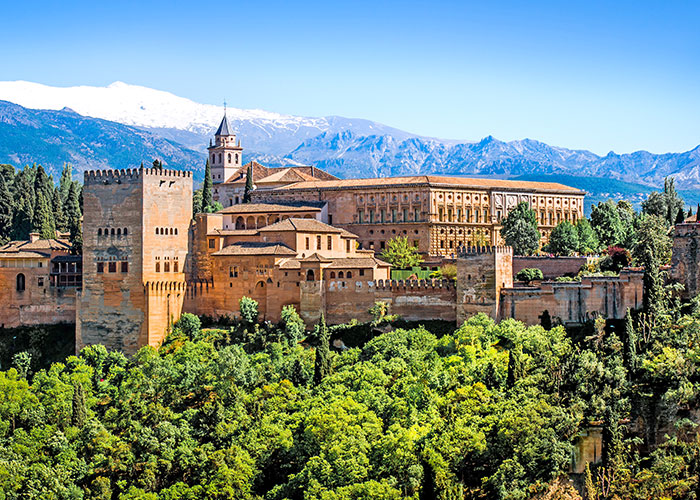
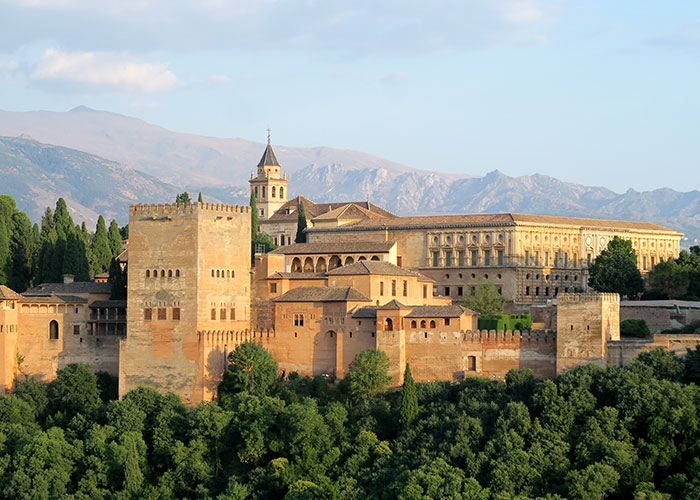
The Alhambra & Generalife

Granada’s top attraction, a majestic complex of Nasrid palaces, courtyards, and gardens atop a hill, with ornate halls and beautiful Islamic art and architecture. Exploring it will easily take half a day. From the top of the Alcazaba fortress towers you’ll see panoramic views of the city and the Sierra Nevada.
Albaicin Quarter Granada

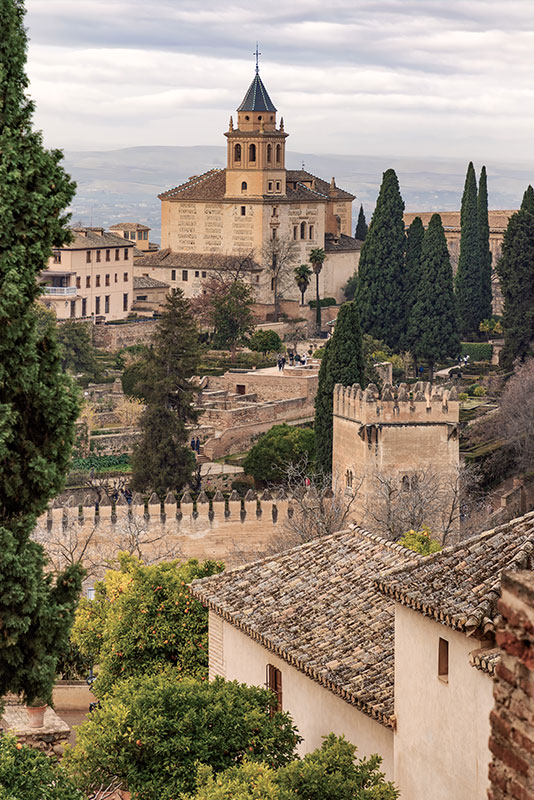
Albaicín Quarter

The old Moorish neighborhood situated on a hill facing the Alhambra, with whitewashed houses, flowered balconies, and small squares. The Mirador de San Nicolás offers postcard-perfect view of the Alhambra with the mountains behind.

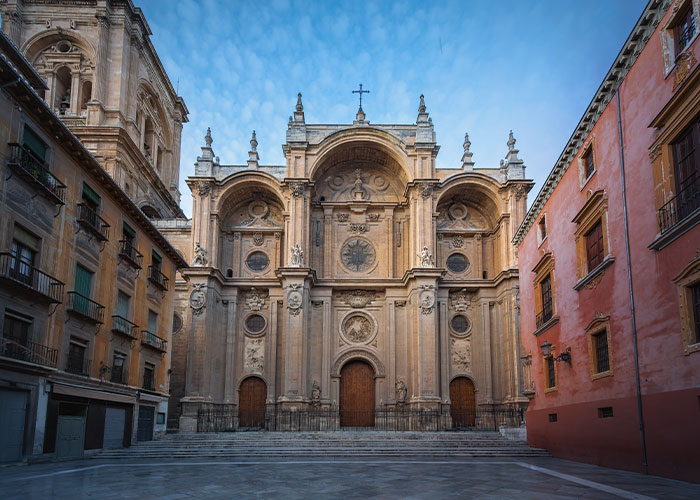
Granada Cathedral

Granada Cathedral & Royal Chapel

In the city center, Granada’s Cathedral is a masterpiece of Renaissance architecture with an ornate gold-and-white interior. Adjacent is the Capilla Real (Royal Chapel), which holds the tombs of the Catholic Monarchs, Queen Isabel and King Ferdinand, who conquered Granada in 1492.

Getting around Barcelona

How to Get Around the City

Seville’s historic center is compact and very pedestrian-friendly. You’ll likely do much of your exploring on foot, especially in areas like Santa Cruz or around the Cathedral.

  • Granada is a relatively small city, and much of the sightseeing is concentrated in or near the historic center, so walking is the primary way to get around

  • You can stroll from the Cathedral to Plaza Nueva in about 5-10 minutes, and from there head up into the Albaicín on foot (though be prepared for some hills and steps).

  • The ascent to the Alhambra is more demanding – it’s about a 15-20 minute uphill walk from Plaza Nueva. If you’d rather save your legs for inside the Alhambra, consider taking a taxi or the special C30/C32 minibuses that shuttle between the city center and the Alhambra/Generalife.

  • For most visitors, buses or taxis fill any gap that walking doesn’t cover. Taxis in Granada are reasonably priced – you might take a short cab ride up to the Mirador de San Nicolás or back from Sacromonte at night if you prefer not to walk the unlit hilly paths

  • The central streets around the Cathedral and Alcaicería are pedestrianized or narrow, so cars won’t help there. If you have a car for out-of-town trips, park it while in Granada; driving in the old center is not allowed for unauthorized vehicles.

  • Granada is quite safe and pleasant to wander around, even at night in the busy areas, so don’t hesitate to explore on foot – just be mindful of the incline when heading to the hilly neighborhoods

Where to Stay (Best Neighborhoods)

Choosing the right barrio will enhance your Seville experience. Here are great neighborhoods for first-timers:

Centro (Cathedral Area)

Staying around the Cathedral/Gran Via/Plaza Nueva places you in the modern center of Granada. You’ll have easy access to shops, restaurants, and be equidistant between the Alhambra and Albaicín. This area (sometimes called Centro-Sagrario) is flat and very walkable. It’s perfect if you want to be in the thick of things and have bus connections at hand. Hotels here range from boutique accommodations in historic buildings to larger modern hotels.

Albaicín

For atmosphere, it’s hard to beat the Albaicín. There are small hotels and guesthouses (many in restored historic homes called cármenes) that offer rooftop terraces with Alhambra views. Waking up in the Albaicín means stepping out your door into a beautiful maze of history. Keep in mind it’s hilly and not as accessible for cars, and you may need to do some uphill walks, but the authenticity is worth it. This is the “most authentic neighborhood” and top area to stay according to many travellers

Realejo

The Realejo district, Granada’s old Jewish quarter, lies on the slopes below the Alhambra. It’s a charming and less touristy area to stay, with street art, local tapas bars, and a bohemian feel. Realejo is still central (5-10 min walk to Plaza Nueva) but feels more local. It’s a good choice if you want a mix of local life and proximity to sights.

Bib-Rambla/Elvira Area

Somewhere between the center and Albaicín, around Calle Elvira or Plaza Bib-Rambla, can also be a strategic base. You’re right by the tapas bar streets (Elvira is known for its tapas and tea shops) and halfway between the Cathedral and the Albaicín climbs. It’s lively but not as steep as staying deep in Albaicín.
Getting There (Arrival Info)

  • Granada is accessible by plane, train, or bus, though it doesn’t have the huge transport hubs of larger cities.

  • Federico García Lorca Granada-Jaén Airport (GRX) is Granada’s airport, located about 15–20 km west of the city. It’s a small airport mostly served by domestic flights (from Madrid, Barcelona, etc.) and a few international routes

  • From the airport, a shuttle bus (about 3€) meets arriving flights and goes to the city center (stopping at places like Gran Via and the Cathedral) – it takes around 30–45 minutes

  • A taxi from the airport will cost around 25–30€.

  • By train, Granada is now connected to Spain’s high-speed rail network. Direct AVE trains from Madrid reach Granada in about 3 hours and 20 minutes

  • There’s also a direct train from Barcelona (via AVE to Córdoba then Granada) taking about 6.5 hours, and from Seville (some direct trains ~2.5–3h, or a transfer in Córdoba). Granada’s train station is on Avenida de Andaluces, about 1.5 km north of the historic center.

  • Long-distance buses are a popular way to reach Granada, often being cheaper than trains. The Granada bus station is about 3 km northwest of the center. Buses from Madrid (approx, 5 hours), Seville (approx. 3 hours), and Córdoba (approx. 2.5 hours) run frequently. ALSA is the main operator. To get from the bus station to downtown, you can take city bus SN1 or SN2 (to Gran Vía) or a 10-minute taxi.

When to Visit

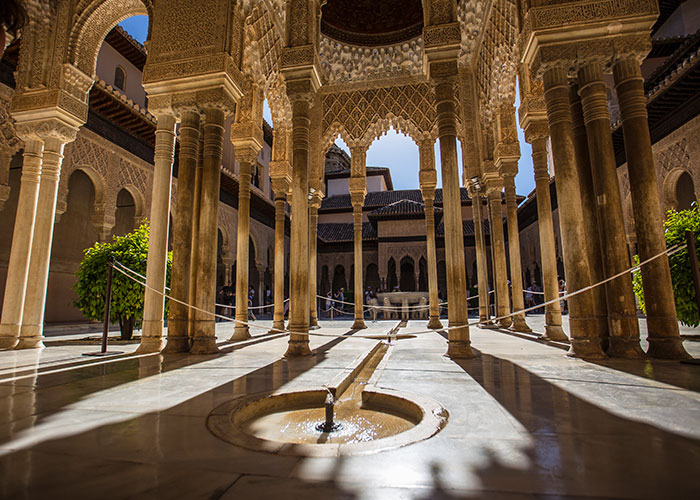
Spring (Mar-May)

A great time to explore the Alhambra and blooming gardens, with mild temps from 15–25°C (59–77°F)
Summer (Jun – Aug)

Hot and dry, especially midday, with temperatures between 28–35°C (82–95°F) — plan sightseeing early or late
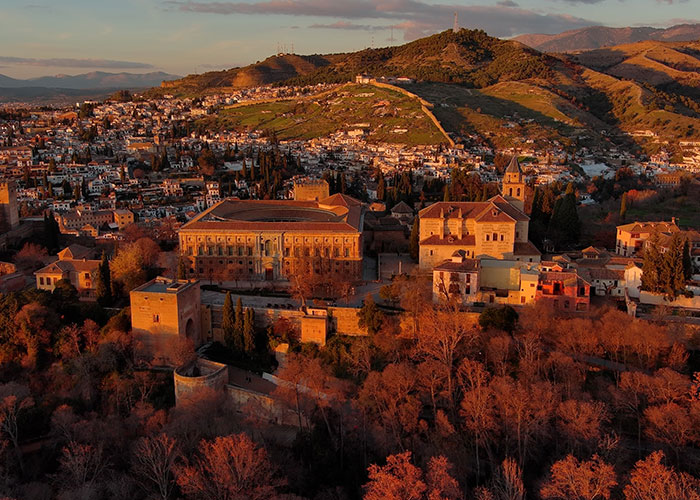
Fall (Sep – Oct)

Warm days and cooler nights make it ideal for walking the Albaicín, with temps ranging 18–28°C (64–82°F)
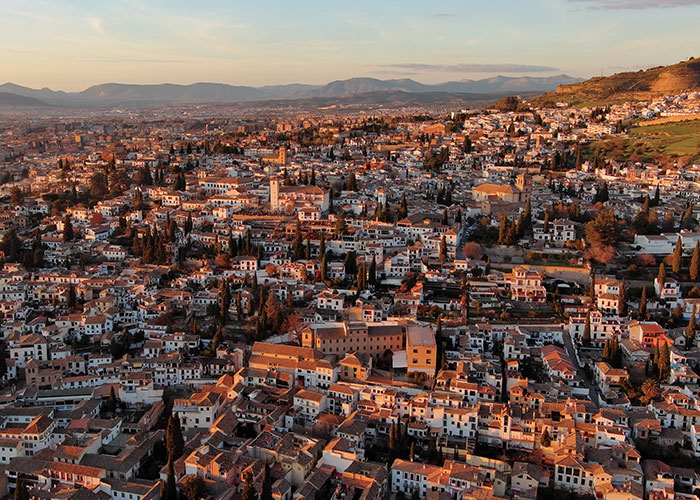
Albaicin Quarter Granada

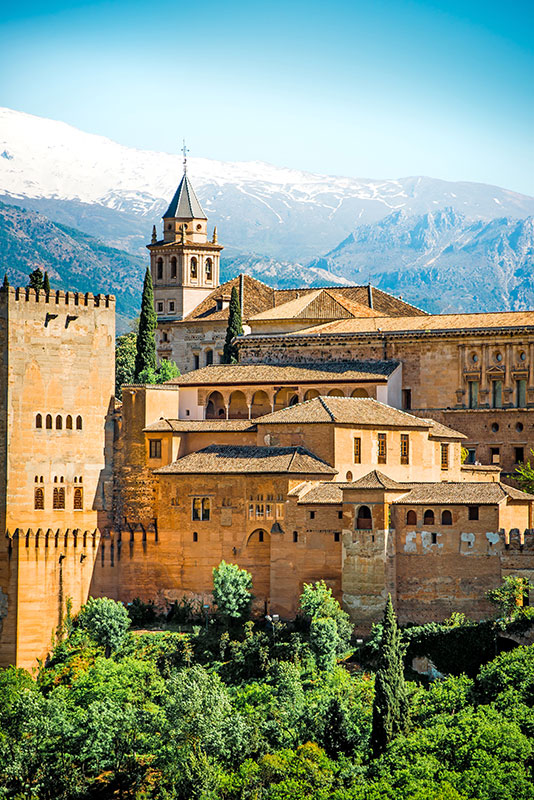
Winter (Nov – Feb)

Chilly but often sunny, with mountain views and daytime temps from 7–15°C (45–59°F) — snow on the Sierra Nevada adds a nice backdrop

Helpful Tips for First-Time Travelers

  • Alhambra Tickets = Book Early: The Alhambra is extremely popular and entry is limited. It’s highly recommended to book tickets online weeks (even months) in advance during high season. If standard tickets are sold out, consider a guided tour or the Granada Card (city pass) which includes Alhambra entry. When visiting, bring your passport (they sometimes check ID with tickets) and arrive at the Nasrid Palaces entry at your exact time slot (the rest of the complex you can explore either before or after that time). Plan on spending at least 3 hours inside to fully enjoy it.

  • Free Tapas Tradition: In Granada, you’ll quickly notice that whenever you order a drink – be it a beer, wine, or even a soft drink – a free tapa arrives as well. So, a fun (and economical) way to dine is to go on a tapas bar crawl: hop from bar to bar, ordering a drink at each and sampling the free specialties. Some popular areas for tapas include Calle Elvira (more student vibe), Plaza Nueva, and around Calle Navas. It’s a great way to try Andalusian specialties

  • Tipping is not obligatory in Spain, but leaving some coins for good service at a tapas bar is appreciated.

  • Dress in Layers: Granada’s weather can vary. If you’re visiting in spring or autumn, the daytime might be warm but nights can be cool, especially with the Sierra Nevada influence. In winter, it can even be cold and occasionally snowy in Granada (though the Alhambra looks magical in rare snow). Summers are hot but less humid than Seville – still, up to mid-30s °C (90s °F) in July/August.

  • Enjoy the Teahouses: Owing to its Moorish legacy and modern North African community, Granada has many Arabic-style teahouses especially in the lower Albaicín (around Calderería Nueva street). These cozy spots serve a variety of teas, pastries, and often offer hookah (shisha). Stepping into one can feel like a little trip to Morocco – which is a unique aspect of Granada’s culture. They are a nice afternoon escape or post-dinner relaxation, typically open until late evening.

  • Local Schedules: Granada, being a student town, has lively nightlife – don’t be surprised if restaurants only start filling up after 8pm and bars go strong past midnight. Many shops (other than big chains) will close for siesta from around 2pm to 5pm, so plan any shopping accordingly.