Seville Travel for First-Time Visitors

Seville is the focus point of Andalusia. Here you’ll find orange trees at every street corner, flamenco and breath-taking Moorish architecture. It’s smaller than Madrid and Barcelona, and more distinct with whitewashed buildings, beautiful plazas and historic center. It has a multicultural heritage having been a wealthy port of the Spanish Empire and the capital of the Moorish Al-Andalus. Beyond iconic monuments you can expect to enjoy tapas in buzzing bars, flamenco performances and a leisurely pace of life.

Top Attractions in Seville
Seville Cathedral

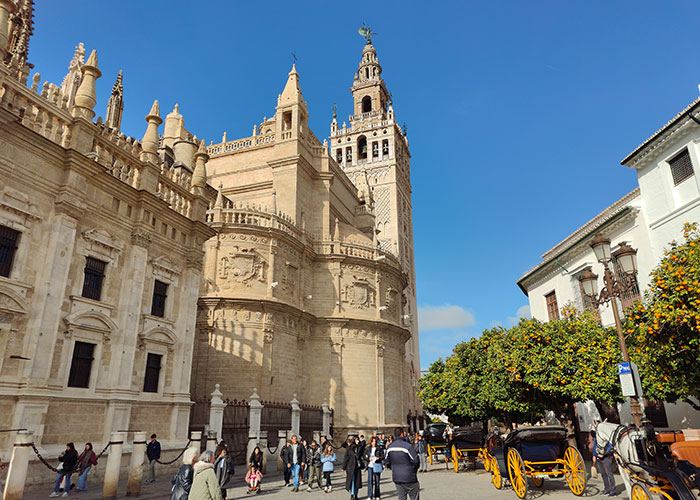
Seville Cathedral & La Giralda

This colossal 15th-century cathedral houses the tomb of Christopher Columbus. You can climb to the top of the adjacent Giralda Tower via a passageway for panoramic views of the city.

Real Alcázar of Seville

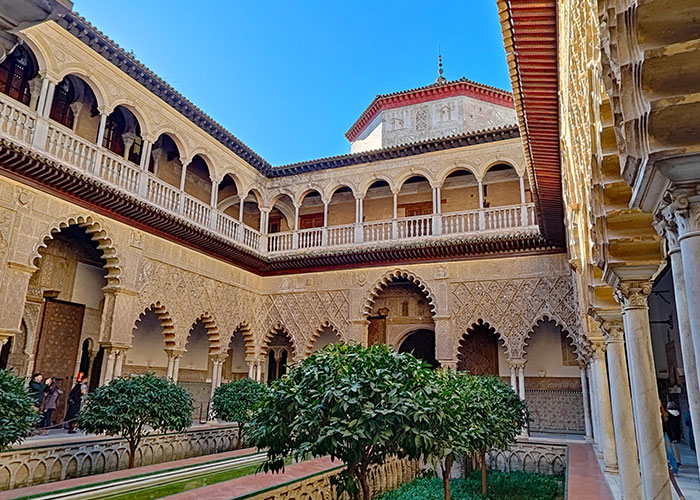
A stunning palace complex built by Moorish kings and used by Christian royalty, with ornate Mudéjar architecture, complex tilework and expansive gardens with palm trees, fountains and peacocks.

Plaza de Espana Seville

Plaza de España

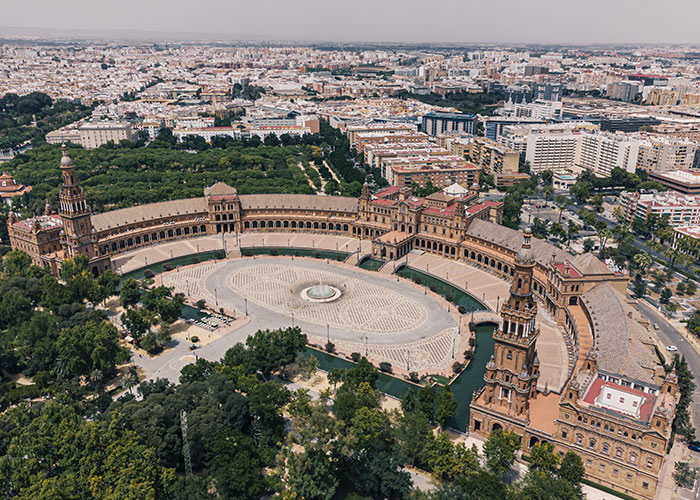
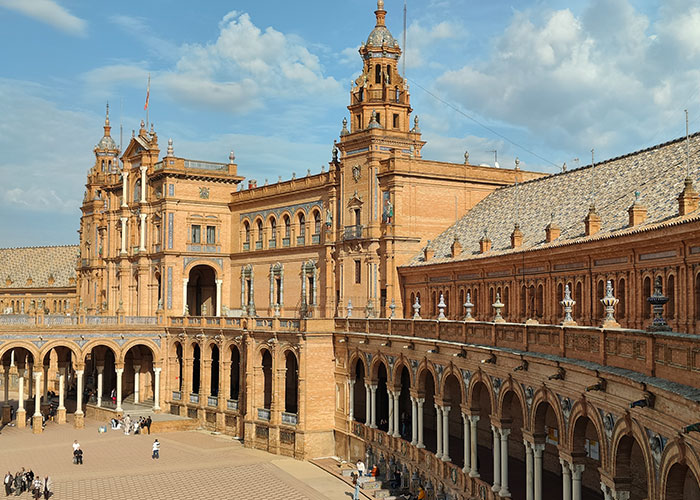
This magnificent plaza was built in 1929 for the Ibero-American Expo in a semi-circular shape around a palace building, with colourful tiled alcoves showcasing each Spanish province, a canal and ornate bridges.

Barrio de Santa Cruz

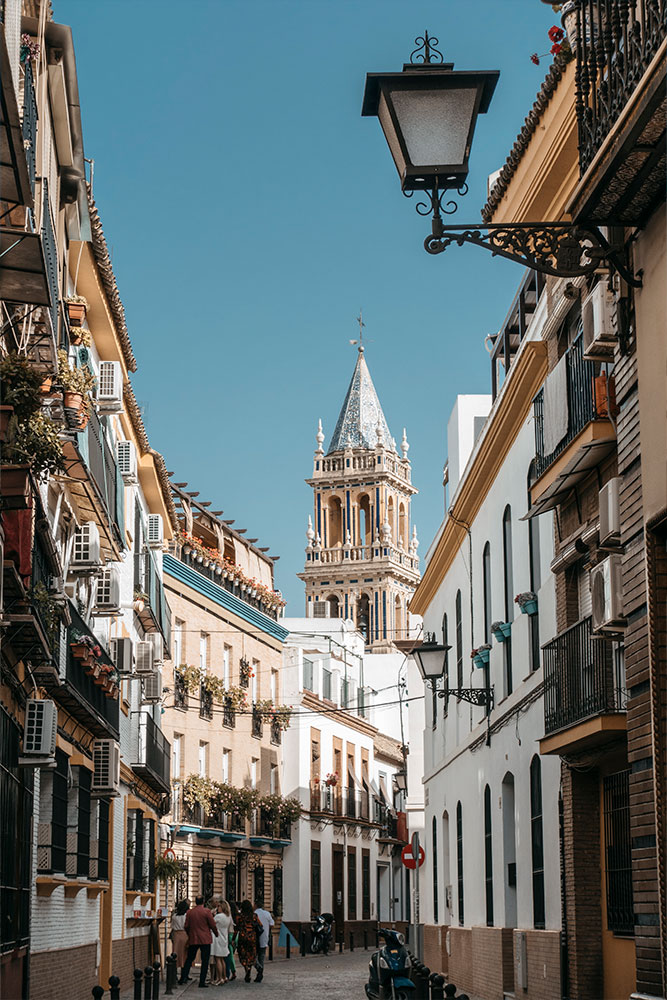
The old Jewish quarter behind the cathedral with narrow streets and flower filled patios. You’ll find a charming village vibe with small courtyards, orange trees and outdoor café tables.

Seville Parque de Maria Luisa

Parque de María Luisa

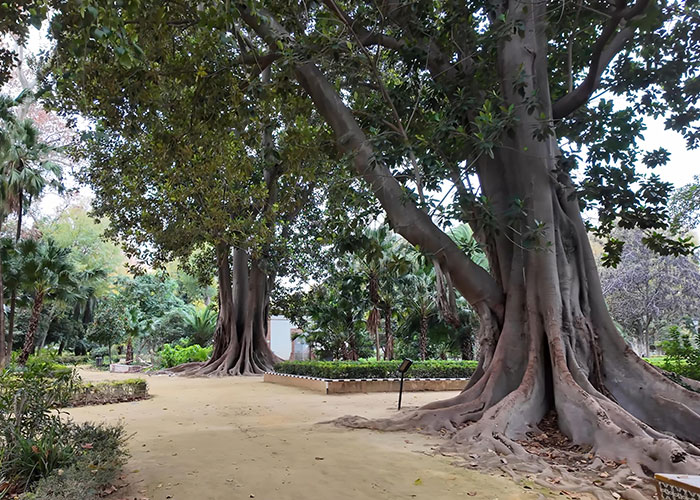
A lovely park adjacent to Plaza de España with shaded pathways (great for a stroll or carriage ride)

Getting around Barcelona

How to Get Around the City

Seville’s historic center is compact and very pedestrian-friendly. You’ll likely do much of your exploring on foot, especially in areas like Santa Cruz or around the Cathedral.

  • The city has excellent public transportation options including a small metro system, trams, and an extensive city bus network

  • The Metro (Line 1) is limited but can be useful if you’re staying near one of its stops or traveling out to some suburbs

  • The MetroCentro tram runs through the center (connecting Plaza Nueva with the area near Plaza de España) and is handy for a quick hop through the old town

  • Buses (operated by TUSSAM) cover the whole city; they are affordable and frequent: for example, buses C1/C2 loop around the center and buses 21/32 link the Santa Justa train station to downtown. You can buy single tickets on board for about €1.40 or get a rechargeable travel card for multiple rides.

  • Many visitors find that walking is the best way to see Seville. The core sights are within a 15-minute walk of each other.

  • Seville also has a public bike rental program (Sevici) and plenty of bike lanes; cycling can be a fun way to get around, especially along the bike path by the Guadalquivir River or through Maria Luisa Park

Where to Stay (Best Neighborhoods)

Choosing the right barrio will enhance your Seville experience. Here are great neighborhoods for first-timers:

Santa Cruz

This is the postcard-perfect area most people imagine – the old Jewish Quarter right by the Cathedral and Alcázar. It’s very central (you can walk everywhere) and atmospheric, especially in the evenings when the day-trippers leave. Many boutique hotels and guesthouses here occupy historic buildings with courtyards.

El Arenal

Just west of Santa Cruz, El Arenal is another excellent area encompassing the bullring (Plaza de Toros), the Opera House, and riverfront. It’s a great location for first-timers, you’re close to major attractions, and the vibe includes both cultural sites and upmarket dining. The nightlife and tapas scene here (try Calle Arfe or around) is lively but it generally quiets down overnight

Triana

Across the Guadalquivir River, Triana is a colorful, authentic Sevillano neighborhood with a strong flamenco heritage and its own identity. It’s a bit further from the main sights (a 15-minute walk across the bridge to the Cathedral), but many visitors love Triana for its local feel

Alameda / Macarena

North of the main tourist area, around Alameda de Hércules and Macarena, there’s a trendy, bohemian zone popular with younger locals and expats. This area has tons of bars, hip restaurants, and a nightlife scene. It’s a bit off the typical tourist path (about 20–25 minutes walk to the Cathedral), but it offers affordable accommodations and a fun vibe
Getting There (Arrival Info)

  • Seville Airport (SVQ), also known as San Pablo Airport, is the main airport serving the city. It’s a mid-sized international airport about 10 km (6 miles) northeast of Seville’s center.

  • The easiest way from the airport to downtown is the EA airport bus, which runs every 20-30 minutes. The ride takes about 30 minutes and costs only a few euros

  • Taxis and rideshares are of course available at the terminal (with a fixed fare around €22 into the city)

  • If coming by train, most likely you’ll arrive at Sevilla Santa Justa station. Santa Justa is on the AVE high-speed line. Madrid to Seville takes about 2.5 hours by fast train

  • There are also direct trains from Córdoba (45 min), Málaga (2 hours) and Valencia (4 hours via Madrid)

  • From Santa Justa station, local buses 21 or 32 go toward the city center in about 10 minutes, or a taxi to the Cathedral area is 10€.

  • If you’re driving, note that the old town has many pedestrian streets and limited parking. You’ll likely need to park in a public lot on the outskirts of the center (and once parked, explore on foot or via taxi).

Aerial View of Plaza de Espana, Seville, Spain

When to Visit

Seville View Plaza de Espana

Spring (Mar-May)

One of the best times to visit, with orange blossoms in the air and temps from 17–27°C (63–81°F) – plus lively festivals like Feria de Abril.
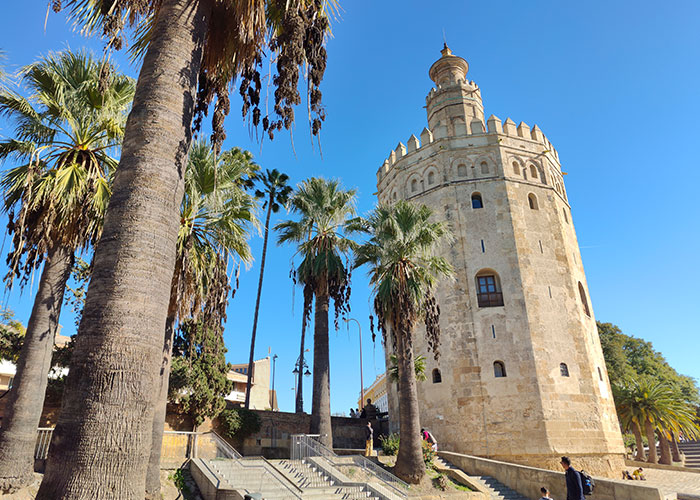
Seville Torre del Oro

Summer (Jun – Aug)

Very hot and dry, often topping 35-40°C (95-104°F) – sightseeing is best early or late in the day.
Fall (Sep – Oct)

Still warm but more comfortable, with temperatures between 20-30°C (68-86°F) and fewer crowds.
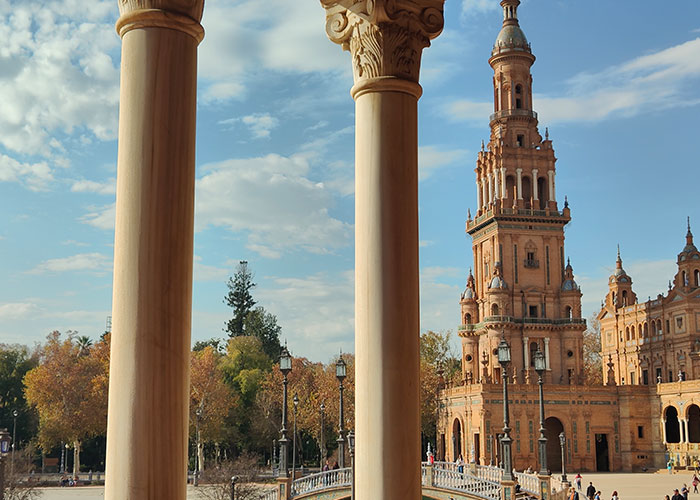
Plaza de Espana Seville

Winter (Nov – Feb)

Mild and pleasant, with daytime temps around 10-18°C (50-64°F) – great for relaxed exploring without the heat.

Helpful Tips for First-Time Travelers

  • Mind the Heat: Seville is one of Europe’s hottest cities in summer. From June through early September, afternoon temperatures frequently exceed 40°C (104°F). If you visit in summer, focus on indoor sightseeing or rest in the early afternoon and save outdoor exploring for mornings and evenings when it’s cooler. Stay hydrated, wear sunscreen and a hat, and take advantage of the long lunch break. Many shops will close in the afternoon (2–5pm) for siesta on hot days.

  • Flamenco Shows: Experiencing flamenco in its birthplace is a must. For an authentic show, consider visiting a tablao (flamenco venue) or a peña. Popular tablaos like El Palacio Andaluz or Casa de la Memoria offer nightly performances. Make sure to book tickets in advance, especially on weekends. The shows usually last about an hour.

  • Tapas Etiquette: Seville has a thriving tapas culture. Hop between bars and try one or two dishes at each – this is called tapear. It’s common to stand at the bar or grab any available barrel or ledge. Don’t be shy about throwing your used napkins on the floor; paradoxically, it’s a sign of a popular tapas bar! Must-try local tapas include jamón Ibérico (Iberian ham), solomillo al whisky (pork in whiskey sauce), and espinacas con garbanzos (spinach and chickpeas). In busy bars, it’s okay to signal the bartender with a friendly “¡Perdona!” to place your order.

  • Advance Tickets: For the Alcázar and Cathedral, booking online in advance is highly recommended to avoid long queues. The Alcázar in particular has limited capacity and often sells out for popular time slots. Booking a few days (or weeks in peak season) ahead will ensure you get in at your preferred time. If you forget, consider going early in the morning when lines are shortest.

  • Getting Around at Night: The center of Seville is very walkable, but if you’re out late (especially in Triana or farther neighborhoods), know that taxis are widely available and not too pricey for city trips. There is limited night bus service. The historic center’s streets can be a bit confusing at first; having an offline map or GPS on your phone helps if you’re navigating the labyrinth at night.